TAKE INTO YOUR BUYING BRIEF
Three things to record
| Check | What to request |
|---|---|
| Status | Production, registration and sale description |
| Preparation | Dated PDI and resolved findings |
| Delivery | Actual equipment, accessories and final condition |
Define the status the customer is buying
Ask whether the requirement concerns an unregistered vehicle, a particular production period or another clearly stated condition. Keep production date, first registration and sale date separate. An unused appearance does not establish the administrative history, and a recent registration does not prove recent manufacture.
The new and used acceptance guide provides the broader comparison. For a stock purchase, identify which status details are mandatory and which are preferences. This avoids rejecting a suitable candidate over an unspecified expectation or accepting one whose documented status differs from the customer’s actual requirement.
Ask about storage without inventing deterioration
Request the available storage and movement history and whether the car has undergone any preparation or repair. Time in stock is a reason to inspect relevant condition, not proof of damage. Ask the provider to assess the actual vehicle rather than assigning a universal fault list from the length of storage alone.
Keep observations such as surface condition, tyre findings or auxiliary-battery concerns tied to the inspection report. Let the appropriate personnel determine the required work. A general storage assurance is less useful than a dated account of what was checked, what was found and whether any recommended action has been completed.
Make the PDI specific to the offered car
Request a pre-delivery inspection record naming the vehicle, date, provider and scope. A blank checklist or sample certificate explains a process but does not show that this candidate passed it. Distinguish a planned appointment from completed work and ask how findings are recorded and closed.
For a hybrid candidate, clarify that the applicable vehicle checks are included without assuming the PDI is an exhaustive battery-life assessment. For any powertrain, unresolved warnings or operating concerns need an appropriate response. The new-car description should not be used to avoid documenting a concern identified during ordinary preparation.
Verify the equipment customers will actually use
Compare the supplied car with the accepted feature list, including controls, cabin functions, keys and any promised accessories. Factory option descriptions and destination requirements should remain connected to the actual version. A stock substitution needs its own equipment review even if the exterior colour and broad trim label are unchanged.
The phone-projection guide is useful where language or connectivity determines acceptance. Verify the requested function through an appropriate demonstration. Do not treat a different market’s screen image as evidence that the selected China-market car includes the same software or that online services will operate after export.
Distinguish ordinary preparation from disclosed repair
Ask the supplier to state any known transport, storage or other repair work relevant to the offer. Obtain an accurate description rather than automatically rejecting every prepared vehicle or assuming a new label means no work has ever occurred. The buyer can only apply its acceptance criteria to information that remains visible.
Where work affects a material requirement, request completion evidence and any appropriate follow-up assessment. A polished appearance does not explain what happened underneath. Keep cosmetic correction, component replacement and unresolved damage separate in the file so the receiving dealer can describe the car without relying on a vague fully prepared phrase.
Agree what travels with the vehicle
Count keys, manuals, tools and agreed accessories against the order. Identify items that will be supplied separately and who is responsible for them. A demonstration using a workshop cable or accessory does not mean that item is included in the vehicle price or will arrive with the car.
The export handover checklist connects those items to the final vehicle record. Retain current condition photographs and the agreed preparation outcome. If the car moves through several storage or handling stages after inspection, define when the final condition is recorded rather than relying entirely on an earlier PDI photograph.
Turn the review into an acceptance decision
Send Panda the required new-car status, acceptable production periods, powertrain and must-have equipment. State the storage and PDI evidence needed before accepting a stock candidate. Ask the quotation to identify included preparation and any separate costs so the customer can compare the actual finished offers.
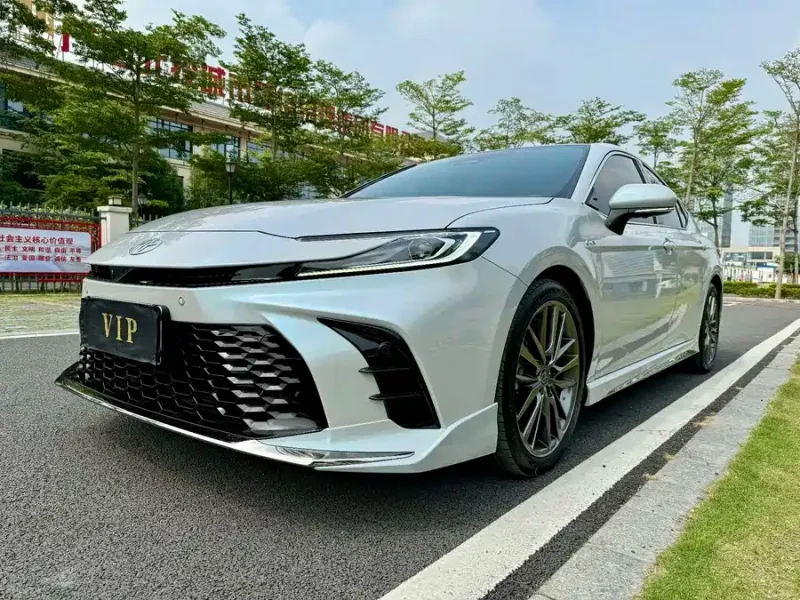
Keep unresolved items in an action list with a responsible party and closure requirement. Do not mark the order complete because most boxes are checked if a mandatory feature or status condition remains open. A useful new-stock buying file explains what was confirmed for this Camry and which remaining steps precede release.