
TAKE INTO YOUR BUYING BRIEF
Three things to record
| Check | What to request |
|---|---|
| Petrol request | Identify engine, transmission and maintenance evidence |
| Hybrid request | Add hybrid-system inspection and support scope |
| Either powertrain | Compare equivalent condition and equipment |
Read the China-market specification
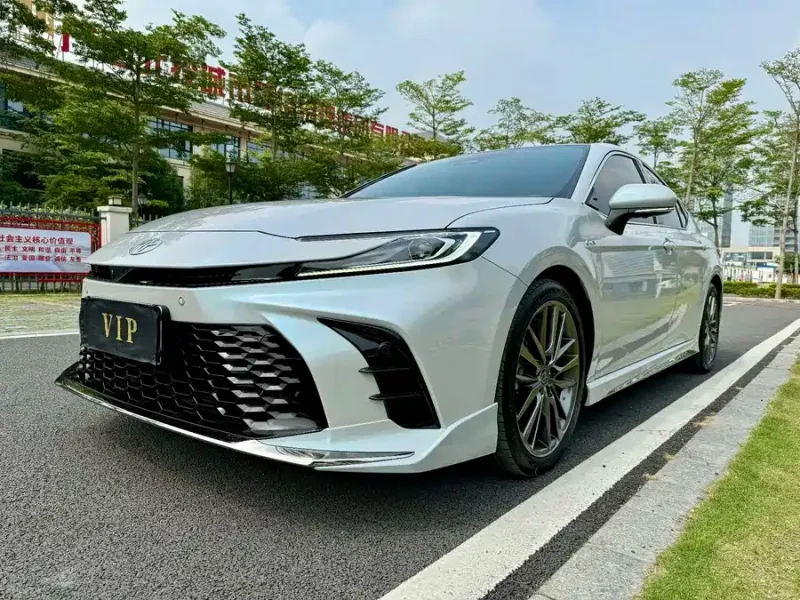
GAC Toyota’s published Camry material distinguishes 2.0-litre petrol, 2.0-litre hybrid and 2.5-litre hybrid configurations. These references describe a product range; they do not confirm that every configuration is currently available from Panda. Request the candidate’s original designation and applicable specification.
Do not apply the United States 2025 hybrid-only description to every China-market Camry. The year and market guide explains why both location and production context belong beside a powertrain description.
Understand the hybrid request
A conventional Camry HEV request concerns a hybrid system that does not require routine external plug-in charging. It should not be described as a plug-in vehicle or compared with one using an assumed charging routine. Confirm the actual system and operating instructions.
For a used hybrid, request battery-system evidence and the relevant inspection scope. The hybrid battery guide distinguishes a charge-level display from a documented condition assessment. For a new candidate, check production and registration status as well as present condition.
Compare the customer’s operating pattern
Record annual distance, frequent routes, traffic conditions, loading and local fuel costs. Use comparable evidence if projecting fuel expense. A test-cycle figure from one version is not a guaranteed result for a different car or a different driving pattern.
Include servicing, insurance and any relevant local charges in the ownership comparison. State assumptions and leave uncertain values open. A useful cost discussion is more specific than claiming that one powertrain always saves money for every customer.
Check support and the commercial scope
Ask which provider can inspect and service the offered system at the destination. Separate parts availability claims from a named provider’s accepted scope. The ownership-cost guide connects those questions to a practical operating budget.
Keep vehicle price, inspection, preparation and supplied items on comparable lines. Where both petrol and hybrid candidates remain suitable, ask for matched condition and equipment requirements so the comparison is not driven by unlike vehicles.
Example: a mixed dealer enquiry
A dealer serves both urban commuters and customers who travel mostly between cities. Prepare separate use profiles, then compare suitable petrol and hybrid offers against each profile. Keep the evidence for history, equipment and support consistent. If operating data are incomplete, describe the open assumptions. This allows the dealer to explain why a candidate suits one customer without promising the same outcome for every buyer.
Model references: GAC Toyota Camry (China), China configuration sheet (PDF), and Toyota’s US 2025 Camry brochure (PDF). Market-specific information must be matched to the offered vehicle.