
TAKE INTO YOUR BUYING BRIEF
US sedan generation timeline
| Generation | US model-year reference |
|---|---|
| First | 1983–1986 |
| Second | 1987–1991 |
| Third | 1992–1996 |
| Fourth | 1997–2001 |
| Fifth | 2002–2006 |
| Sixth | 2007–2011 |
| Seventh | 2012–2017 |
| Eighth | 2018–2024 |
| Ninth | Starts with US model year 2025; check the individual version |
Start with the source market
Ask where the vehicle was originally specified and sold. A translated advertisement can borrow a familiar overseas trim name without describing the same equipment. Retain the Chinese designation where applicable, the vehicle reference and a readable English explanation.
Toyota’s United States announcement identifies the 2025 Camry as a ninth-generation hybrid-only model. GAC Toyota’s China material also lists petrol configurations. That difference is a reason to check market-specific records, rather than using a foreign brochure to certify a China-sourced car.
Toyota’s US history begins with the 1983 introduction. The table gives commonly used US model-year generation boundaries, built from Toyota’s historical and launch references. Other markets use different launch timing and sometimes different lineage labels, so this is a US sedan reference rather than one worldwide production calendar.
For the first-year question, Toyota’s 2018 European presentation dates the Camry nameplate to 1982, while Toyota’s US history records its American introduction in 1983. Those statements describe different market milestones; keep the table’s US scope visible when using it for a sourcing request.
For an Accord shortlist, the Accord candidate comparison retains original market and candidate identity rather than blending regional specifications. For a Nissan alternative, the Teana comfort/use comparison connects Teana/Altima wording with original records and actual offered equipment.
For a Passat proposal, the Passat offer-value comparison establishes source context and installed configuration before a technology comparison. For an Avalon alternative, the Avalon premium decision identifies each actual unit instead of inferring equivalence from shared branding.
When Corolla is considered for the budget, the Corolla budget alternative identifies its original application separately from Camry records. The child/adult family-layout review matches vehicle context before applying relevant restraint instructions to the offered family layout.
Keep three dates separate
Record production, advertised model year and first registration in separate fields. A late registration does not demonstrate a later generation. For an unregistered candidate, identify the records available to establish production and status without inventing a first-registration date.
The new and used guide sets different acceptance questions for those conditions. Broad sourcing across years means buyers can discuss suitable alternatives; it does not establish that older versions remain available new.
Verify the powertrain and equipment
Ask for the engine and powertrain designation, then obtain the applicable configuration sheet. Avoid inferring hybrid status from exterior styling alone. The powertrain comparison explains how the choice changes the inspection and ownership questions.
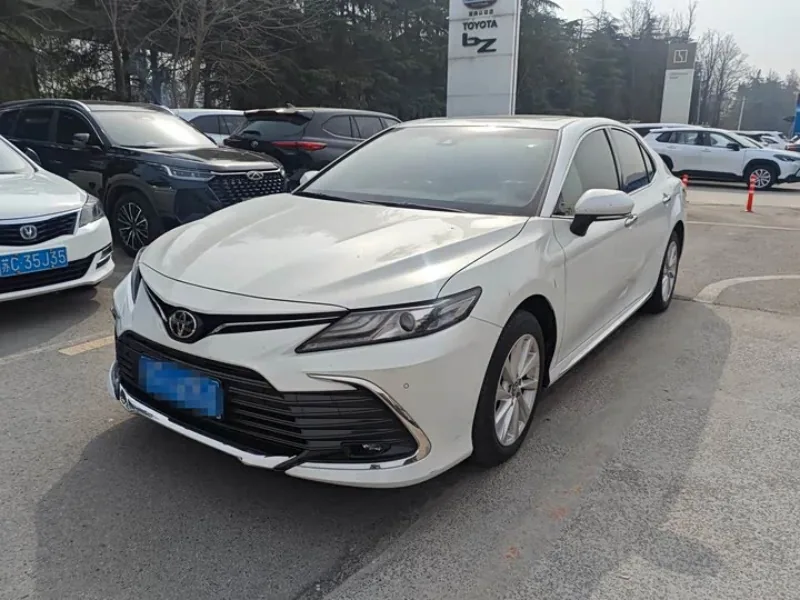
Photographs can support visible equipment checks, but similar bodywork can accompany different engines, options or update periods. Identify the exact item the customer requires and request evidence that answers that item. A newer appearance is not a complete specification.
For a used shortlist, compare the seventh versus eighth generation or eighth versus ninth generation against the same buyer requirements. The hybrid year guide distinguishes vehicle generation from hybrid-system numbering.
Review substitutions as new candidates
If a seller proposes another production period, compare the agreed requirements again. Keep changes to powertrain, equipment, condition and supplied items visible beside the revised price. Do not transfer an inspection conclusion from the first vehicle to its replacement.
The trim checklist helps organise the comparison. For several cars, use one row per unit and make any allowed variation explicit. A common Camry description should not conceal materially different vehicles in a dealer order.
For several units, the matched/mixed powertrain order review defines common essentials and expressly permitted period or powertrain variation. For remote sourcing, the remote acceptance-file decision connects one actual candidate to current records and demonstrations that answer the brief.
Example: later registration, earlier specification
A buyer asks for a particular update, while an offer highlights a later registration year. Request production information and the relevant original equipment record. If the update itself is required, retain that requirement. If the customer needs only one function associated with the update, verify the function directly. Record the reason for accepting or rejecting the candidate so that a later substitution can be reviewed against the same decision.
Relevant references: Toyota USA: historical Camry milestones, Toyota USA: third-generation archive, Toyota: sixth-generation US debut, Toyota USA: seventh-generation introduction, Toyota USA: eighth-generation introduction, Toyota USA: ninth-generation introduction, Toyota Europe: 1982 nameplate context. References describe their stated market or technology; verify the offered vehicle separately.