
TAKE INTO YOUR BUYING BRIEF
Three things to record
| Check | What to request |
|---|---|
| Application | Verified wheel and tyre requirements |
| Condition | Individual tyres, wheels and any associated findings |
| Fitted quote | Correct items, fitting and relevant checks |
Identify the fitted wheels before choosing a price
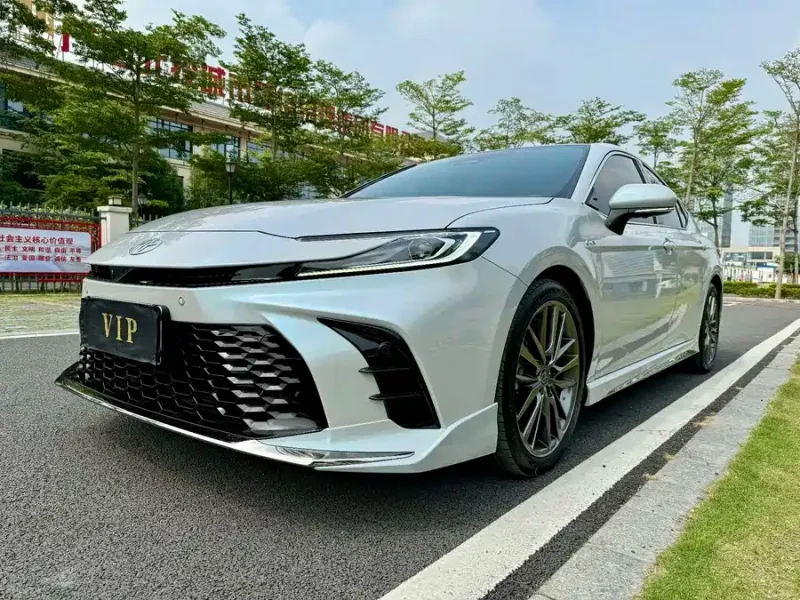
Request the actual tyre markings, wheel information and relevant vehicle guidance. A photograph showing an attractive wheel design does not establish its dimensions or suitability. Ask whether the wheels are original or changed, particularly when the offered car’s appearance differs from the source-market specification.
The equipment verification guide keeps version claims separate from installed items. Let a competent provider verify the application rather than selecting a size from a different Camry brochure. Where records and fitted parts disagree, resolve the discrepancy before the dealer describes the vehicle as having the expected factory arrangement.
Request an individual condition record
Have each tyre and relevant wheel assessed by an appropriate provider, with the observations recorded rather than reduced to a single good-tyres statement. Ask about wear, visible damage, repairs and other findings relevant to serviceability. Do not infer the whole set’s condition from one clear sidewall photograph.
Record which positions were examined and what the provider recommends. A clean tread image cannot establish every aspect of tyre condition, while an unfamiliar marking needs interpretation rather than an immediate conclusion. The inspection should produce an understandable decision for the actual fitted set and identify any limitation that requires further review.
Consider the destination and intended use
Tell the tyre provider about the operating climate, ordinary road use and relevant customer requirements. Do not assume a tyre fitted in the source market automatically meets every destination need. Appropriate selection depends on the actual vehicle application as well as the conditions in which the customer expects to drive.
Keep seasonal suitability and other local requirements separate from appearance preferences. A dealer may like a particular wheel style but still need an appropriately supported tyre route. Ask the receiving provider to confirm suitable availability before choosing a vehicle whose nonstandard arrangement could complicate routine replacement after arrival.
Investigate unusual wear rather than masking it
The used Camry inspection should connect tyre observations with any relevant suspension, steering or wheel findings. New tyres can improve the supplied condition, but they do not by themselves resolve the cause of an unusual wear pattern. Let the qualified inspector decide whether further assessment is needed.
Keep diagnosis and appearance work on separate lines. If associated repair is recommended, obtain its scope and completion evidence instead of assuming a tyre change closes the issue. The customer needs to know whether the car was simply given a fresh set or whether a related concern was professionally assessed and addressed.
Compare complete fitted quotations
Ask for the precise proposed items, quantity, supplied condition and fitting scope. Clarify which additional services or components are included where relevant, and request an itemised explanation of exclusions. A price for one bare tyre cannot be compared directly with a quote for a complete fitted set.
Keep currency, quote date and availability visible. If the proposal depends on a substitute, require application confirmation before accepting it. Do not treat a more expensive brand name as proof that the installation outcome will be correct; suitability, workmanship and the agreed verification remain separate parts of the finished job.
Separate preparation spending from fuel estimates
The city fuel-budget guide deals with operating assumptions. Do not promise a particular fuel saving merely because the car receives new tyres or different wheels. Use the appropriate vehicle requirements and relevant evidence, and avoid converting an untested accessory claim into a guaranteed monthly saving.
For a candidate comparison, list the agreed tyre work as immediate preparation. Keep later replacement planning distinct, since future wear depends on use and condition. This makes the purchase discussion clearer than spreading an uncertain tyre allowance across an assumed ownership period and presenting the result as a fixed cost per kilometre.
Retain the accepted arrangement at handover
Ask for the final supplied tyre and wheel description, work invoice where applicable and any associated completed inspection record. If a replacement occurs after the original assessment, update the file. Photographs and paperwork should refer to the set that actually travels with the vehicle, not an earlier demonstration arrangement.
Tell Panda whether original fitment, a particular appearance or specific destination suitability is mandatory. Provide the accepted production period and condition preference alongside those requirements. A precise request lets suppliers price appropriate preparation without inventing one Camry tyre specification or hiding unresolved wheel concerns behind a low replacement allowance.