
TAKE INTO YOUR BUYING BRIEF
Choose the next action
| Finding or requirement | Purchase response |
|---|---|
| Adults and cases travel together | Assess the actual simultaneous arrangement with needed places occupied. |
| Driver settings differ in demonstrations | Retain normal positions for the relevant company user. |
| Another assignment is offered as proof | Record the changed brief rather than approving the original task automatically. |
Define the actual recurring assignment
Ask whether the car serves solo appointments, visiting clients or a regular adult group, with the normal driver and cases included. The passenger framework retains the simultaneous task. A favourable demonstration for one employee can remain useful without approving a larger airport pickup whose occupants and luggage were never represented in the media.
Separate ordinary company travel from any regulated passenger service the buyer intends. Appropriate destination parties should answer operating questions for that use; supplier confidence or a successful baggage demonstration cannot establish universal permission. Keep that review alongside the vehicle requirement instead of assuming the business label supplies every local answer or removes the need to identify the actual assignment before sourcing.
Maintain the normal driver position
The rear adult review fixes front settings during the client assessment. Do not move the driver forward merely to create persuasive rear-space images or approve several passengers from incompatible setups. Retain which people and movements were represented, especially when the actual users cannot directly assess the proposed vehicle and a personal-fit question remains open.
Where staff rotate, record the positions relevant to their own recurring trips rather than treating one convenient demonstration as approval for all drivers. The driver-position decision keeps access and useful posture beside rear space. A car can suit one assignment while leaving another unanswered; that distinction is useful allocation information rather than a reason to promise universal business comfort from the badge.
Load the actual cases with required places occupied
The boot task review establishes the real bags, opening and normal closure. A capacity figure or folded arrangement should not answer an airport requirement that needs those passengers seated. Keep unrepresented cases pending rather than approving the combined journey from one attractive empty cabin and a separate photograph of a different baggage load.
Ask how the driver handles and retrieves the relevant items at a normal stop. A useful arrangement should retain the routine and any accepted inconvenience, not only initial fit. If a bulky case changes the task, write that concession explicitly. Appropriate luggage restraint remains relevant; a loosely arranged media presentation cannot establish the complete travelling setup the company intends to use repeatedly.
Value daily functions before presentation extras
List the needed phone, seat, climate and parking methods, then obtain relevant ordinary responses on the actual car. The equipment review keeps specification tied to period and market. A prestigious-looking cabin may lack the mundane method that matters on every trip, while optional entertainment or audio may add little to this particular company assignment.
Retain receiving-user setup and relevant support answers, not an unrestricted promise drawn from the seller's current interface. The camera-value decision keeps the wanted view distinct from location fit. If an essential is unavailable, ask whether the company accepts a changed routine rather than allowing unrelated extras or a lower amount to alter the original request silently.
Keep operation and individual condition independent
The operating budget framework uses relevant route, fuel and scope assumptions without guaranteeing universal company savings. Scheduling and accepted stop routines belong with the real use. A plausible calculation cannot certify vehicle health, and a favourable inspection cannot establish every future fuel result or the practical service arrangement at every location the company expects to visit.
The scope comparison retains status, current findings, preparation and supplied items. A showroom presentation is not comprehensive inspection. Define responsible work and completed evidence where needed, and explain the useful supported assignment received for the amount. A cheaper initial quote can represent different preparation or incomplete evidence rather than the same accepted deliverable at a saving.
A regular pickup uses a limiting case
Suppose the company normally carries rear adults and a recurring large case, but the seller demonstrates smaller bags or moves the driver to improve the image. Preserve those observations while requesting the actual combined assignment. The simplified presentation should not approve the original journey by implication, even when the cabin and boot look appealing separately.
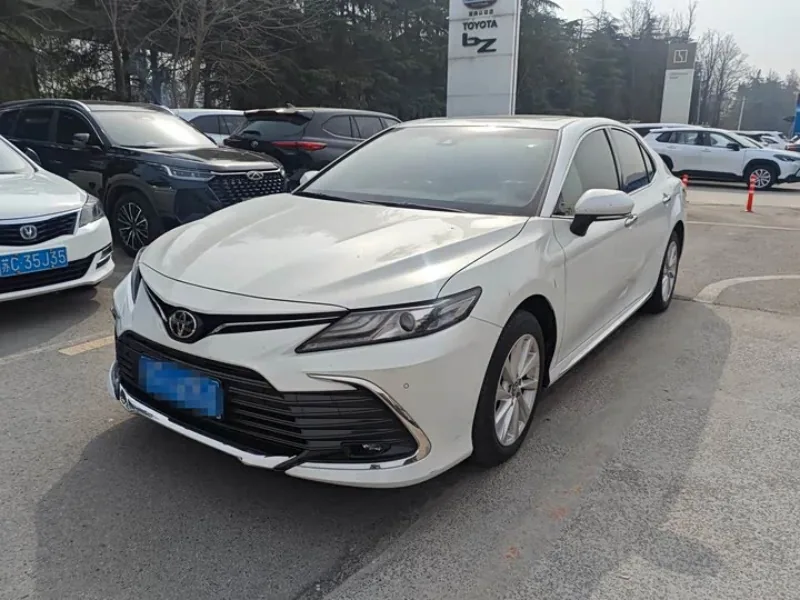
If the company accepts a smaller task, record which candidate serves it. The multi-car order decision keeps assignments per unit rather than transferring one airport result to every proposed Camry. A substitute needs its own configuration, condition and practical task evidence before it inherits the first car's acceptance.
Questions buyers ask
Does a boot capacity figure prove airport suitability?
No. Assess the real cases, occupants, loading and normal closure.
Can one good example approve a whole company order?
No. Keep practical assignment and condition evidence per unit.
Model references: GAC Toyota Camry (China), China configuration sheet (PDF), and Toyota’s US 2025 Camry brochure (PDF). Market-specific information must be matched to the offered vehicle.